Cataract · Foundation level · 2 questions
Gradual painless vision loss
Teaching case · Awaiting clinical review. For professional education; apply clinical judgement and local referral pathways.
Presentation
A 73-year-old reports gradually worsening, painless blur over 18 months and increasing glare from headlights. Reading and driving have become difficult despite updated spectacles. Examination shows lens opacity corresponding to the visual symptoms. A dilated assessment finds no other pathology explaining the reduction in vision.
0 of 2 questions completed
Question 1 of 2
Answer: Visually significant cataract
The gradual blur and glare, together with lens opacity, support visually significant cataract in this teaching case.
Why not the other options?
The acute conditions do not fit the gradual course, and conjunctivitis does not explain the lens opacity and progressive visual impairment.
Question 2 of 2
Answer: Discuss cataract surgery, including functional impact, benefits, risks and the patient’s preferences
Discuss cataract surgery because daily activities remain affected. Explore benefits, risks and preferences, and explain realistic visual expectations, including possible continued need for glasses.
Why not the other options?
Do not guarantee spectacle independence. This case does not indicate retinal surgery, and discussion need not wait for complete loss of vision.
Cataract: clinical example
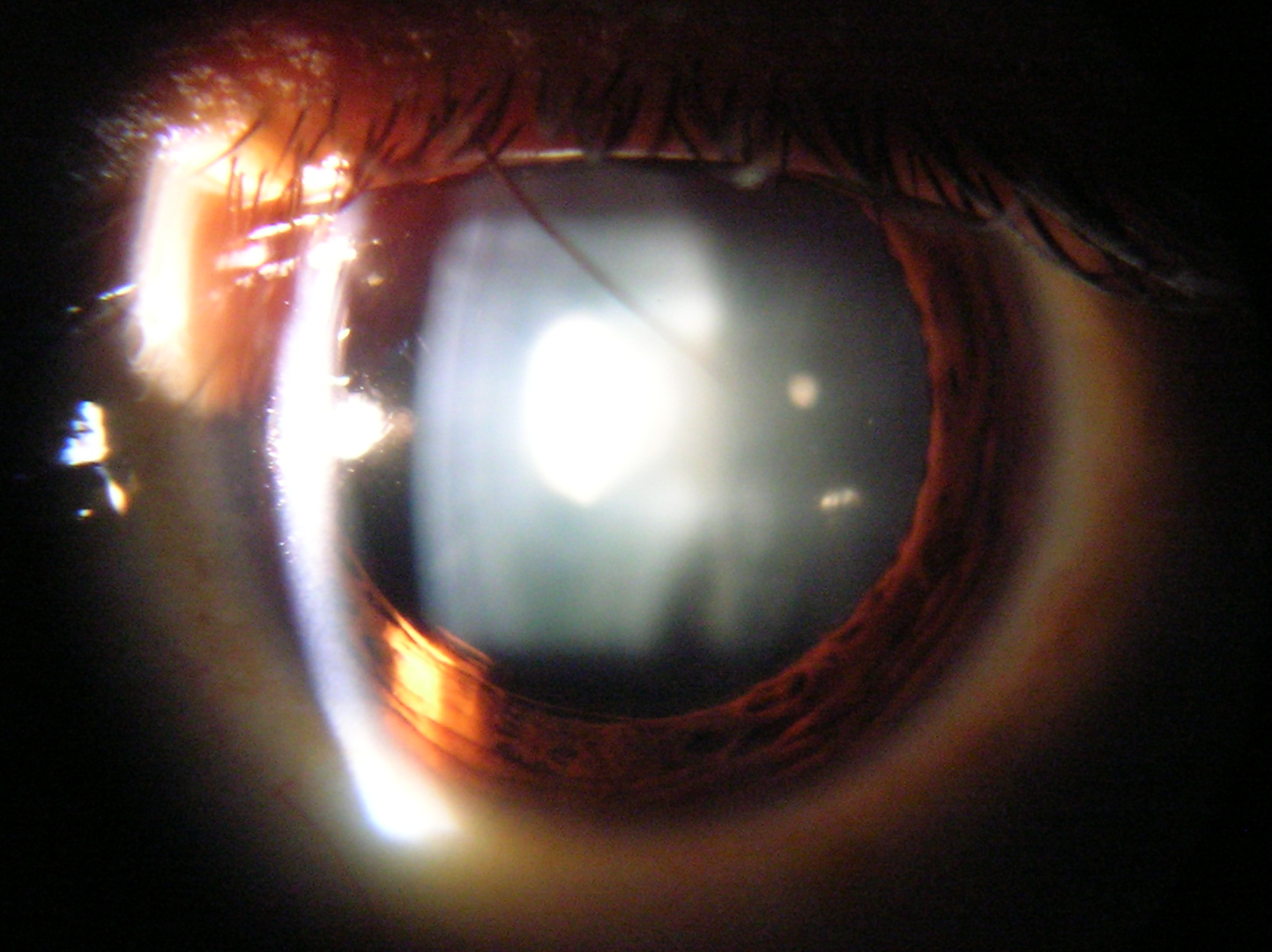
Slit-lamp photograph showing lens opacity in an eye with cataract.
Photo: Rakesh Ahuja, MD · Original source · CC BY-SA 3.0. Image unchanged.
View full-size photograph ↗
Learning points
- Relate lens findings to the symptoms and assess for other causes of visual loss.
- Functional difficulty matters when discussing surgery.
- Use shared decision-making and realistic expectations.