 GCEO Group®
Patients’ Resources
Contact lenses: a safe everyday routine
Contact lenses sit on the eye’s clear front surface. Good vision depends on a suitable fit and a care routine you can follow consistently.
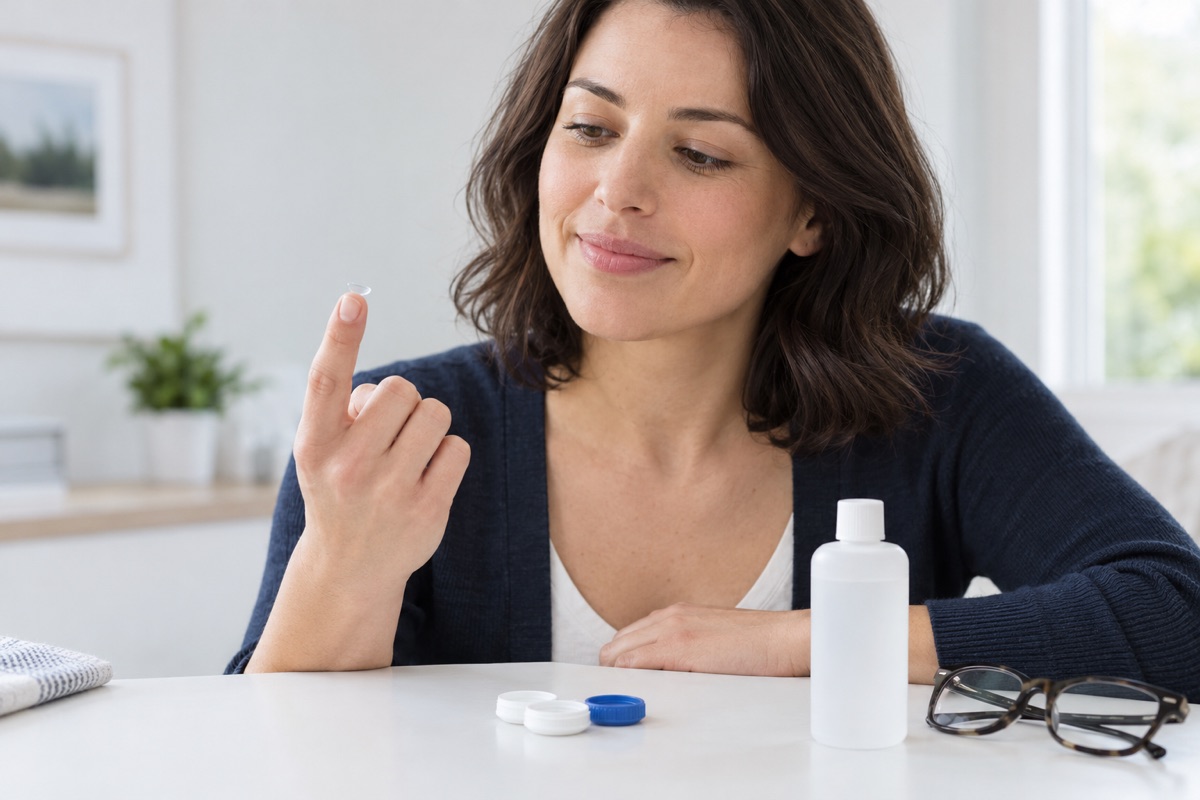
Start with a fitting, not a shopping choice
- An eye-care professional should assess your eyes and prescribe suitable lenses, including coloured lenses without vision correction. Never share lenses.
- Soft and rigid gas-permeable lenses have different handling and care requirements. Ask for a practical insertion and removal lesson.
Know your two schedules
- The replacement schedule tells you when to discard a lens. Daily disposable lenses are single-use: discard after removal. Reusable lenses need cleaning and disinfection between uses.
- The wearing schedule tells you when to remove lenses. A monthly replacement lens is not permission to sleep in it. Avoid sleeping or napping in lenses unless specifically directed by your eye-care professional.
Build a clean, dry routine
- Wash and thoroughly dry your hands before handling lenses. Keep lenses away from water and saliva; remove them before showering or swimming.
- Use the recommended lens-care product. With a multipurpose system, rub and rinse as directed, then store in fresh solution. Empty used solution; never top it up.
- Saline alone does not disinfect. Peroxide systems require their special case and the full neutralisation time on the label; never put unneutralised peroxide into the eye.
- Rub and rinse the storage case with fresh lens solution, then let it dry upside down with caps off. Replace it at least every three months, or sooner if advised.
Keep a backup plan
Carry your current spectacles and attend follow-up appointments. If a problem is being assessed, keep your lenses and case to show the clinician rather than throwing them away.
GCEO patient education. Medical references are listed below. For your own care, follow your clinician’s advice.
Sources and further reading
- FDA: choosing a contact-lens type
- FDA: coloured lenses and professional fitting
- CDC: habits that reduce infection risk
- CDC: cleaning and disinfection systems
- FDA: recognising contact-lens complications
Sources checked: 9 October 2026