 GCEO Group®
Patient resources
First aid for an eye scratch
A scratch on the clear front surface of the eye (cornea) can cause pain, watering, grittiness and light sensitivity. Arrange prompt eye assessment if you suspect a scratch.
Get emergency help now
- A sharp object has pierced the eye, or something hit it at high speed.
- Vision has changed, pain is severe, or you cannot keep the eye open.
- Blood or pus is coming from the eye. Do not drive yourself.
Gentle first aid for loose dust or grit
- If there is no penetrating injury, gently flush loose particles with clean water or sterile saline. Do not use a forceful jet.
- Blink naturally; small loose particles may wash away. If something remains, seek help rather than trying to pick it out.
- Stop wearing contact lenses. A painful red eye in a contact-lens wearer needs urgent assessment.
What to avoid
- Do not rub the eye or touch it with fingers, cotton buds or tweezers. Never remove an embedded object yourself.
- Do not use redness-relief drops or leftover eye medicines. Ask an eye-care professional before using drops for a scratch.
- Do not use anaesthetic eye drops at home; repeated use can damage the cornea.
After your eye examination
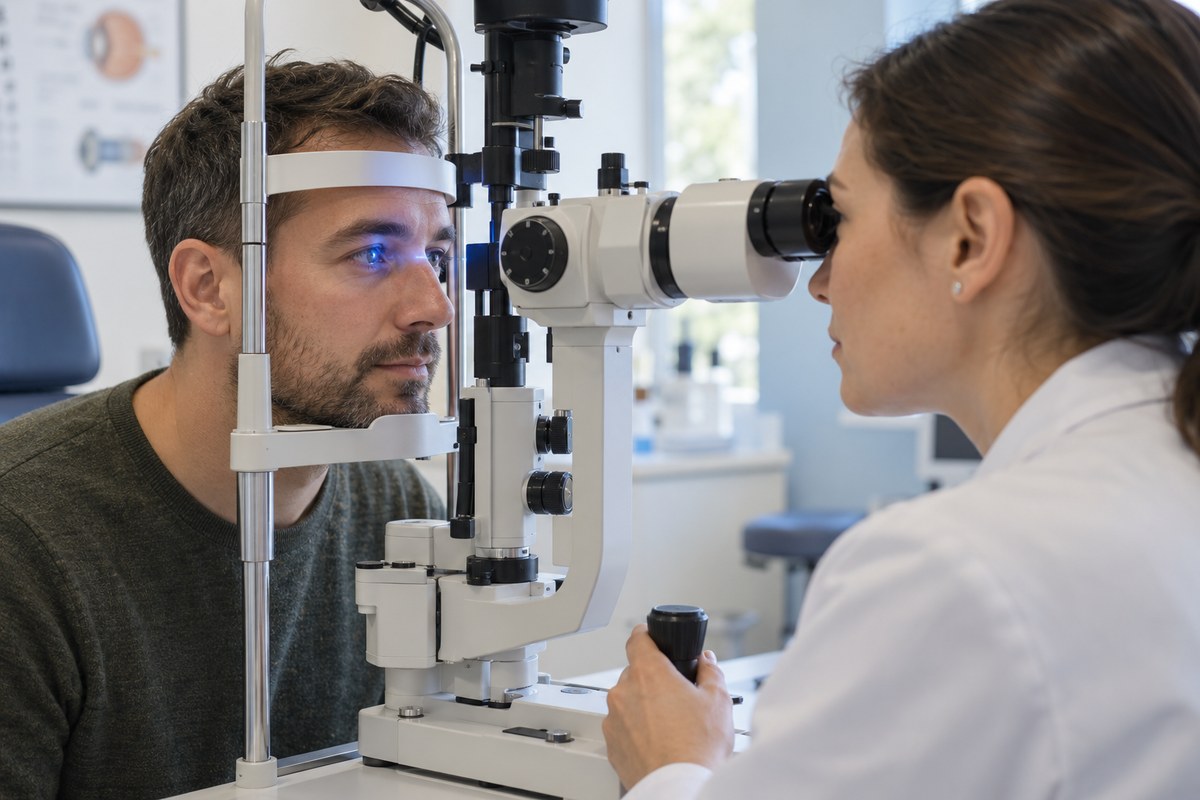
- The clinician may use dye and a slit-lamp microscope to find the scratch and check for a foreign body or infection.
- Use any prescribed drops or ointment as instructed. Sunglasses may ease light sensitivity. Resume contact lenses only when your eye-care professional says it is safe.
Prevent another injury
- Wear suitable protective eyewear for tools, gardening and sports.
- Handle contact lenses carefully and avoid forceful eye rubbing.
Recovery and follow-up
Many minor scratches heal within a few days, but an examination is needed to confirm the injury. Seek further advice if symptoms have not improved after 24 hours, and urgent help sooner if pain or vision worsens. Keep any planned follow-up.
General information. Follow your clinician’s individual advice.
Sources and further reading
- AAO — First aid for eye scratches
- NHS — Eye injuries
- Cambridge University Hospitals — Corneal abrasion
- Gloucestershire Hospitals — Corneal abrasion
- Guy’s and St Thomas’ — Corneal abrasion
Sources checked: 5 October 2026